“Here Be Dragons”
We are in uncharted waters.

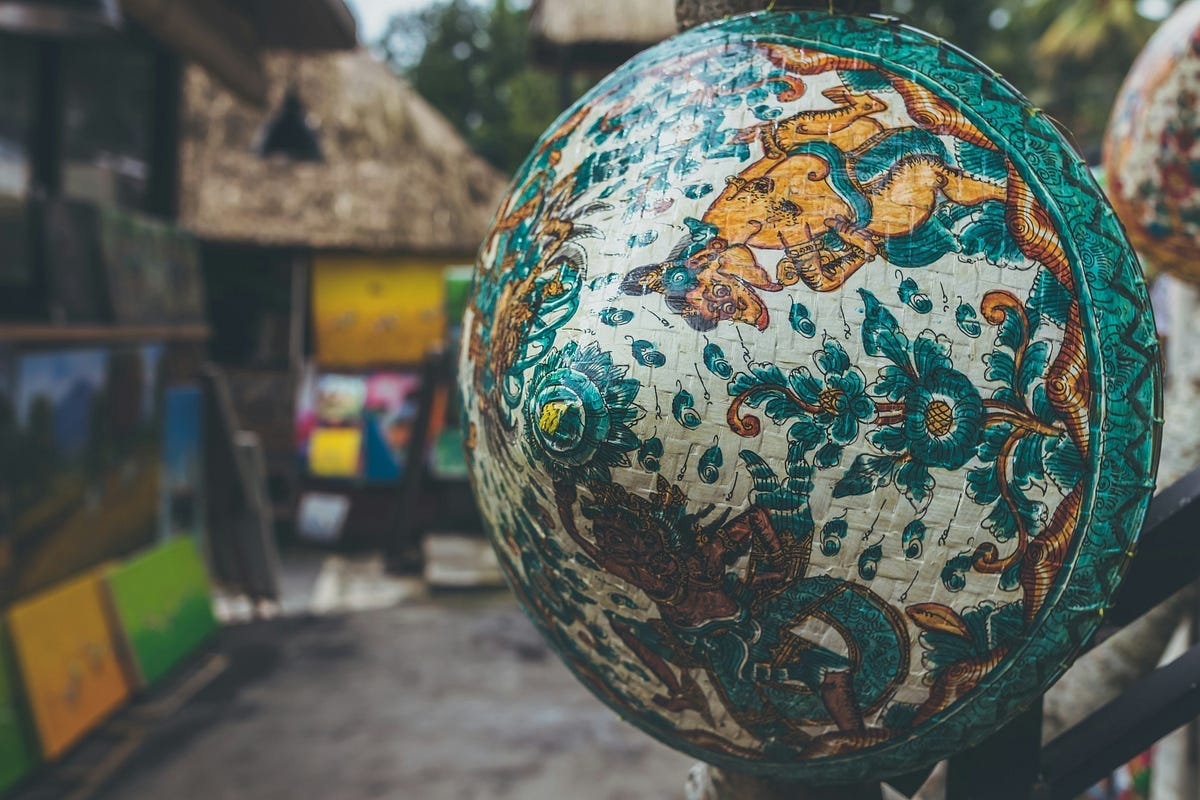
The term “here be dragons” originates from the Latin, hic sunt dracones. The phrase was written in empty spaces on the ancient maps of cartographers and navigators who were exploring the world and had not yet discovered some of its shadowy corners. “Here be dragons” was a way of saying “We have no idea what’s there; it could be anything. So we’re drawing a colorful dragon there as a warning to sailors to be careful.”
Later, the term was stripped of its charming imagery, translated into “uncharted waters.”
The idea for this essay came to me when I made the connection between the outcome of the Spanish Civil War — once it began, it took on a life of its own — and recent comments by experts trying to figure out what lies ahead for the 2026 war that “was launched” against Iran. Several of these political and military experts have used the term: “We are in uncharted waters.”
“We have never been here before; we have no idea what is going to happen next: proceed with caution.”
We must return to the Humanities to learn about history — and ourselves.
Way back in 2012 I bought a stack of DVDs to watch during the long jungle nights in Costa Rica. Some of the titles I had never heard of; I chose them because the titles themselves intrigued me. One of them was There Be Dragons, a 2011 film produced and written by Roland Joffé.
Although I consider myself decently knowledgeable of world history, I was shamefully ignorant of what happened in Spain in 1936, just before World War II began. Watching There Be Dragons was my introduction to the Spanish Civil War, although I vaguely remember having read Hemingway’s novel, For Whom the Bell Tolls (1940), a semi-autobiographical novel about an American who went to Spain, joining thousands of optimistic youth from all over the West to fight against Fascism. What struck me from watching the film was the chaos. There were so many factions involved, so much betrayal. I watched the film twice over a decade and still didn’t understand it.
“What I have most wanted to do…is to make political writing into an art.”
— George Orwell
And then, I read Orwell’s memoir, Homage to Catalonia (1952). His plan had been to go to Spain in the role of a journalist, to report on the war. But once there, he was compelled to choose a side and join in the battle against Fascism. As it turned out, even Orwell was often confused about which side was the good guys and which was the bad guys. The only thing the world knew, when the war had ended, was this: it was a disaster. Franco’s Fascist side won, and Spain was plunged into a dictatorship that lasted until 1975.
I pulled the following quote from The Orwell Foundation website.
‘Three Parties that Mattered,’ from Homage to Catalonia:
‘It is nonsense to talk of opposing Fascism by bourgeois “democracy”. Bourgeois “democracy” is only another name for capitalism, and so is Fascism; to fight against Fascism on behalf of “democracy” is to fight against one form of capitalism on behalf of a second which is liable to turn into the first at any moment. The only real alternative to Fascism is workers’ control. If you set up any less goal than this, you will either hand the victory to Franco, or, at best, let in Fascism by the back door…’
After reading Orwell’s memoir I was curious, so I watched the film again. The third time was the charm. The film begins with a cryptic epigraph: “The question everyone asked was, Whose side are you on?”
War is complicated. Once it begins, you cannot control where it goes or how it ends. Uncharted waters.
Reading Orwell’s memoir expanded my understanding of politics. Not to say I’m not still very confused about what happened in Spain. But what I gathered from reading Orwell and then rewatching the film— the two complement each other — is that World War II began in Spain. Although Mussolini in Italy and Hitler in Germany were building up for conflict in their own countries, it was in Spain that an overwhelming number of young people from all over the world gathered to fight against the rise of Fascism.
Uncharted International Waters
The Gaza Freedom Flotillas that have been launched from Spain for years have in no small way ignited a global movement for the cause of human rights. The most recent brutality of the IOF against these flotillas has escalated into blatant violations of international law. The conflicts all over the world — Russia against Ukraine, Israel against Syria, Lebanon, and Palestine — have led us into the uncharted waters of the USA against Iran.
What happened in Spain in 1936 and beyond is a lesson and a warning for us in 2026.
“The question everyone asked was, Whose side are you on?”
Disclaimer: The opinions in this literary essay are protected by the First Amendment.